Make American Cowboy Again Review
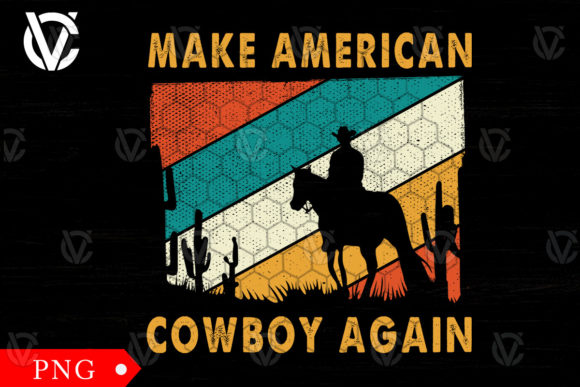
As a designer who spends half my life staring at stitch charts and the other half troubleshooting tension issues on vintage machines, I don’t just look at a design file; I look at how it will behave under the needle. When I first pulled up Make American Cowboy Again, my immediate reaction was one of strong thematic clarity. It isn’t subtle, but in the world of Americana and rustic branding, subtlety is often the enemy of impact. This digital asset feels like it was built for bold statements, specifically tailored for makers who want their finished products to speak immediately without needing a label to explain them.
The visual personality of this design leans heavily into heritage aesthetics. It carries that rugged, nostalgic weight that resonates deeply with current trends in handmade goods. Whether you are an Etsy seller looking to capture the surge in patriotic yet rustic apparel or a craft fair vendor aiming for high-traffic appeal, this graphic offers a clear focal point. The layout suggests a balanced composition that works well as a central chest print or a large back design, providing enough negative space around the edges to prevent crowding when digitized for embroidery.
Real-World Application: From Screen to Stitch
I recently evaluated this design with a specific project in mind: a line of custom embroidered tote bags and heavy-weight sweatshirts aimed at outdoor enthusiasts and rural lifestyle brands. In these scenarios, the durability and legibility of the design are paramount. Make American Cowboy Again translates well to these mediums because its core elements appear robust enough to withstand the wear and tear associated with daily use. For a tote bag, which sees constant friction against shoulders and surfaces, a design with strong outlines and clear shapes holds up better than overly intricate, fragile patterns.
For small business owners and boutique branding, the versatility here is notable. Imagine this applied to a durable canvas apron for a local coffee roaster or a kitchen towel set sold during the holiday season. The theme fits naturally into "farm-to-table" aesthetics or western-themed home decor. When I mock this up digitally, I see it sitting comfortably on a cream-colored tea towel or a navy blue cap. The contrast potential is high, which is exactly what you want for a product that needs to stand out in a crowded online marketplace. It adds a layer of perceived value to a simple garment, transforming a basic item into a statement piece that customers feel good about wearing or gifting.
Technical Performance and Fabric Considerations
However, not every fabric plays nice with every design, and practical experience dictates where caution is needed. While the overall shape is strong, I advise testing this carefully on textured fabrics. If you are attempting to stitch this onto a chunky knit sweater or a rough burlap, the detail might get lost in the weave. Similarly, thin fabrics can pucker if the underlying stabilizer choice isn't perfect. The key to success lies in the preparation.
When working with stretchy fabrics like jersey knits for t-shirts or baby clothes, the risk of distortion increases. You must ensure your hoop size is appropriate and that you are using a cut-away stabilizer to maintain structure. On curved surfaces like caps, the flat nature of the original PNG file means you need to be mindful of how the curve affects the perspective. A design that looks straight on screen can look warped on a six-panel hat if not adjusted for curvature during the digitizing process. Also, consider the thread colors carefully. Dark fabrics require bright, high-contrast threads to make the design pop, whereas light fabrics allow for more muted, vintage-style palettes.
Where to Exercise Caution
There are specific areas where this design requires a critical eye before production. Small details, particularly if they involve tiny lettering or fine decorative accents, should be inspected closely. In machine embroidery, anything smaller than 4mm can become a muddy blob if the stitch density is too low or the thread is too thick. If the design relies on delicate lines to convey its message, those lines may break or merge during stitching. Furthermore, dense stitch areas can create stiffness in the final product. For items like baby embroidery, where softness is a priority, a very dense fill stitch might be uncomfortable against sensitive skin. In such cases, opting for a lighter stitch count or using applique techniques for certain elements could improve the hand-feel of the finished product.
Additionally, if you are producing commercial embroidery items that will undergo frequent washing, the longevity of the design matters. Poorly anchored stitches or inadequate backing can lead to premature fraying. Always test wash your samples. This is especially true for embroidered patches intended for jackets or bags, which endure significant physical stress.
Designer’s Checklist for Success
To get the most out of this digital embroidery file, follow these practical steps before committing to bulk production:
- Test on Scrap Fabric: Never assume a design will work perfectly on your final material. Stitch it out on a scrap piece of the exact fabric you plan to use to check for puckering, color bleeding, or detail loss.
- Check Thread Color Contrast: Evaluate how the design looks in black and white mockups. This helps determine if there is sufficient contrast between the thread colors and the fabric background. Low contrast results in a washed-out, unprofessional appearance.
- Review Stitch Density: Ensure the stitch density is appropriate for the fabric type. Too much density on light fabric causes stiffness; too little on heavy fabric causes gaps.
- Confirm Hoop Size: Verify that the design dimensions fit within your standard hoop sizes. If the design is larger than your hoop, you will need to rehoop, which can introduce alignment errors.
- Inspect Small Details: Zoom in on the finest lines and text. If they are too thin, consider simplifying the design or increasing the stroke width before stitching.
- Stabilizer Selection: Use the correct stabilizer (cut-away, tear-away, or water-soluble) based on the fabric's stretchiness and weight. Proper stabilization is the difference between a professional finish and a failed project.
- Licensing Verification: Since this is a digital product, confirm the licensing terms before selling finished items. Some designs are for personal use only, while others allow commercial sale of the physical product. Do not assume rights; read the documentation included in the ZIP file.
Final Verdict on Visual Appeal and Market Fit
From a branding perspective, Make American Cowboy Again delivers on its promise. It projects confidence and tradition, qualities that resonate with a broad demographic. For creative entrepreneurs and hobbyists alike, this design reduces the guesswork in creating cohesive product lines. It allows you to focus on marketing and sales rather than spending hours tweaking vector files.
The inclusion of a transparent background PNG file at 4500×5400 pixels resolution provides excellent flexibility for creating printable mockups and design assets. You can easily place this graphic onto various product templates to showcase your offerings on social media or Etsy listings. High-resolution previews help build customer trust by showing exactly what the buyer will receive, reducing return rates caused by mismatched expectations.
In summary, this is a solid addition to any library of graphics for apparel decorators and craft business owners. It performs best when applied to sturdy materials with proper preparation. By respecting the technical limitations of embroidery and choosing the right substrates, you can turn this digital download into a highly desirable handmade product. It is not just a decoration; it is a brand builder that connects with customers who appreciate classic, rugged style. Just remember to test thoroughly, choose your threads wisely, and always prioritize the quality of the stitch execution over speed. When done right, the result is a finished product that feels authentic, durable, and professionally crafted.