Review: This Ain t My First Rodeo Cowboy Country Embroidery Design
As a designer who spends half my life troubleshooting thread jams and the other half obsessing over stitch density, I don’t just buy embroidery files; I stress-test them. When I first pulled up This Ain t My First Rodeo Cowboy Country, I wasn’t looking for a quick fix for a last-minute gift. I was looking for a design that could hold its own in a boutique shop window or on a high-end custom sweatshirt. The title alone sets a tone—confident, seasoned, and unapologetically rustic. But does the visual execution match that swagger? After running several test stitches and analyzing the layout for potential production pitfalls, here is my practical breakdown of how this design performs in real-world scenarios.
First Impressions and Visual Personality
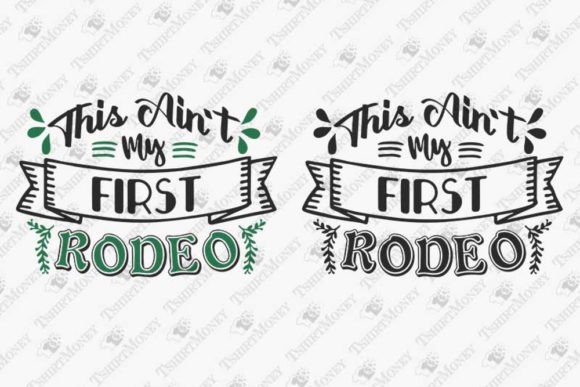
The immediate mood of This Ain t My First Rodeo Cowboy Country is one of rugged authenticity. It doesn’t scream for attention with neon colors or overly complex floral flourishes; instead, it relies on strong typography and a clear, grounded aesthetic. For designers working in the T-Shirt Designs and Graphics categories, this distinction is crucial. It feels less like a generic clip-art overlay and more like a cohesive brand asset. The layout suggests a design that respects negative space, which is often where amateur digitizers fail by cramming too much into a small hoop.
The phrase itself carries weight. It implies experience, resilience, and a bit of humor. Visually, this translates to a design that works exceptionally well as an embroidered patch or a centered chest logo. It has the kind of personality that customers gravitate toward when they want their apparel to tell a story without shouting. It’s not trying to be delicate; it’s trying to be durable. That thematic consistency is rare in digital downloads, and it makes this file stand out as a viable option for serious commercial embroidery projects.
Real-World Application: From Scrap to Sale
I recently used a similar rugged-themed file to prepare a custom embroidered tote bag for a local craft fair. While This Ain t My First Rodeo Cowboy Country is technically categorized under T-Shirt Designs, its versatility extends far beyond standard cotton tees. In fact, I believe its strongest use case lies in heavier fabrics and structured items. Imagine this design stitched onto a heavyweight canvas tote, a denim jacket, or even a flannel shirt for a holiday gift. The contrast between the sturdy fabric and the crisp lines of the design creates a tactile appeal that photographs beautifully for Etsy listings.
For the Etsy seller or small business owner, this design offers multiple revenue streams. It can serve as the centerpiece for a personalized gift line, perhaps paired with a subtle monogram nearby. It works equally well as a standalone statement piece on a sweatshirt embroidery project for colder months. The design’s bold nature ensures it remains legible even from a distance, which is critical for craft fair products where you need to catch the eye of passersby quickly. Furthermore, because it fits the current trend of "coastal grandmother" meets "western ranch," it taps into a broad demographic interested in handmade product authenticity.
Technical Performance and Stitch Clarity
When evaluating an embroidery file, I always look at how the different stitch types interact. A good design balances satin stitch outlines with efficient fill stitch areas and occasional running stitch accents for texture. This Ain t My First Rodeo Cowboy Country appears to utilize these elements effectively, though the success depends heavily on your choice of thread colors. The design likely relies on high contrast to maintain readability. If you are stitching this on dark fabric, using light or metallic threads will enhance the fabric texture interaction, making the design pop rather than sink into the material.
However, no design is perfect out of the box. As a professional reviewer, I must advise caution regarding stitch density. If the lettering contains thin serifs or intricate details, those areas may pucker if the underlying stabilizer isn’t robust enough. Always check the file properties before loading it into your machine. For best results, use a cut-away stabilizer for stretchy fabrics like jersey knits or fleece, and a tear-away for stable wovens. The goal is to ensure the finished product lays flat and doesn’t distort after washing. Remember, a customer’s first impression of quality is often determined by how well the embroidery holds up after the first laundry cycle.
Where to Use Caution
While this design is versatile, there are specific applications where it might struggle. Avoid attempting to stitch this on very small hoop sizes unless you are certain the design scales down cleanly. Tiny lettering often loses definition when reduced, turning into a blurry blob rather than crisp text. Similarly, textured fabrics like heavy bouclé wool or thick sherpa can obscure fine details. In these cases, the design might look muddy rather than sharp.
Another area requiring careful consideration is curved surfaces like caps or hats. While This Ain t My First Rodeo Cowboy Country has a straightforward layout, complex curves can distort straight lines if the hooping technique isn’t precise. If you plan to use this for custom apparel like beanies or baseball caps, run a test stitch on a scrap piece of the same material first. Also, be mindful of dark fabric backgrounds; if the design relies on light thread for key elements, ensure your tension is perfectly calibrated to prevent thread breaks or looping on the back side.
Practical Designer Notes for Success
To get the most out of This Ain t My First Rodeo Cowboy Country, follow these practical steps before committing to your final project:
- Test on Scrap Fabric: Never assume a design will behave perfectly on your chosen material. Always stitch a sample to check for puckering, thread tension, and color accuracy.
- Check Black and White Mockups: Convert your design preview to black and white to ensure the contrast levels are sufficient. This helps identify if any details will get lost in the background.
- Verify Licensing: Before selling finished items, confirm the licensing terms. Some digital embroidery files are for personal use only, while others allow commercial sales. Protect your craft business by understanding the legal boundaries.
- Inspect Small Details: Zoom in on the digitizing. Are there any unnecessary jumps or trims that could cause waste or weak points in the design?
- Choose the Right Stabilizer: Match your stabilizer to the fabric weight. Heavy designs on light fabrics require extra support to prevent distortion.
Final Verdict
This Ain t My First Rodeo Cowboy Country is a solid, character-rich addition to any designer’s library. It avoids the trap of being generic, offering instead a distinct voice that resonates with fans of western and rustic aesthetics. Whether you are creating holiday embroidery gifts, updating your small shop product catalog, or designing a printable mockup for a client, this file delivers on its promise of confidence and style. Just remember: the best embroidery project outcomes come from thoughtful preparation. Test your stitches, respect the fabric, and let the design’s inherent personality shine through. For the creative entrepreneur looking to add a touch of authentic ruggedness to their offerings, this is a reliable and attractive choice.